
Today is my last day at GitHub. Here’s the goodbye I posted internally:
👋 Hi friends! After 4.5 awesome years (6+ including my two Edge years), my time at GitHub is coming to an end. My last day will be November 16.
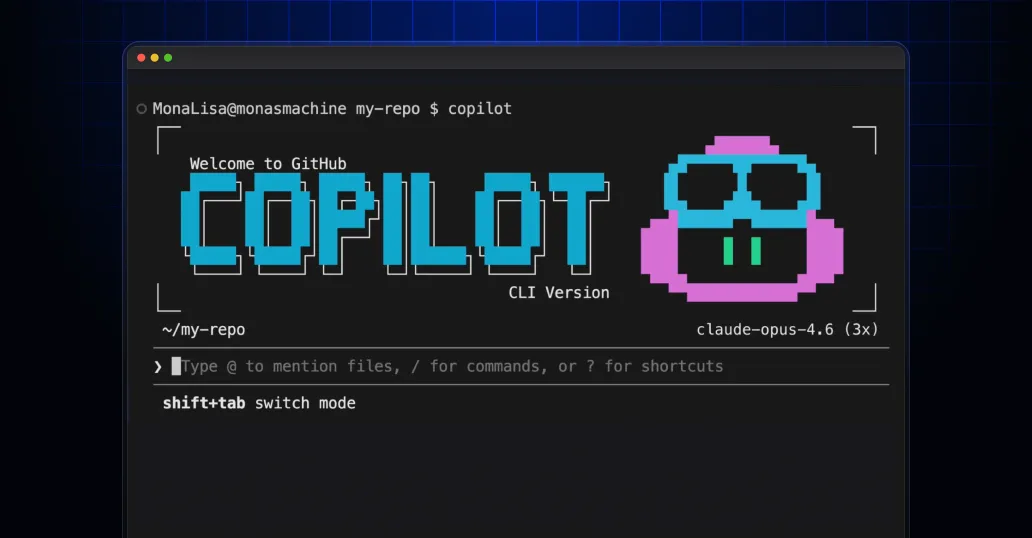
When founding the Copilot CLI last summer, my wildest dreams included it becoming the unifying harness of all the Copilot clients. If you shook me awake from one of those dreams and asked me if I meant “GitHub Copilot” or “Microsoft Copilot,” I would answer “GitHub Copilot” only because I thought it impossible to penetrate all of Microsoft.
Well friends, it didn’t feel impossible for long. With each daily ship from our dedicated, ever-growing team, we won over Microsoft engineering leaders as a developer tool, and kept going until we were rechristened the Microsoft Copilot harness. Beyond my wildest dreams == realized, thanks to the most driven, capable team I’ve ever been a part of.
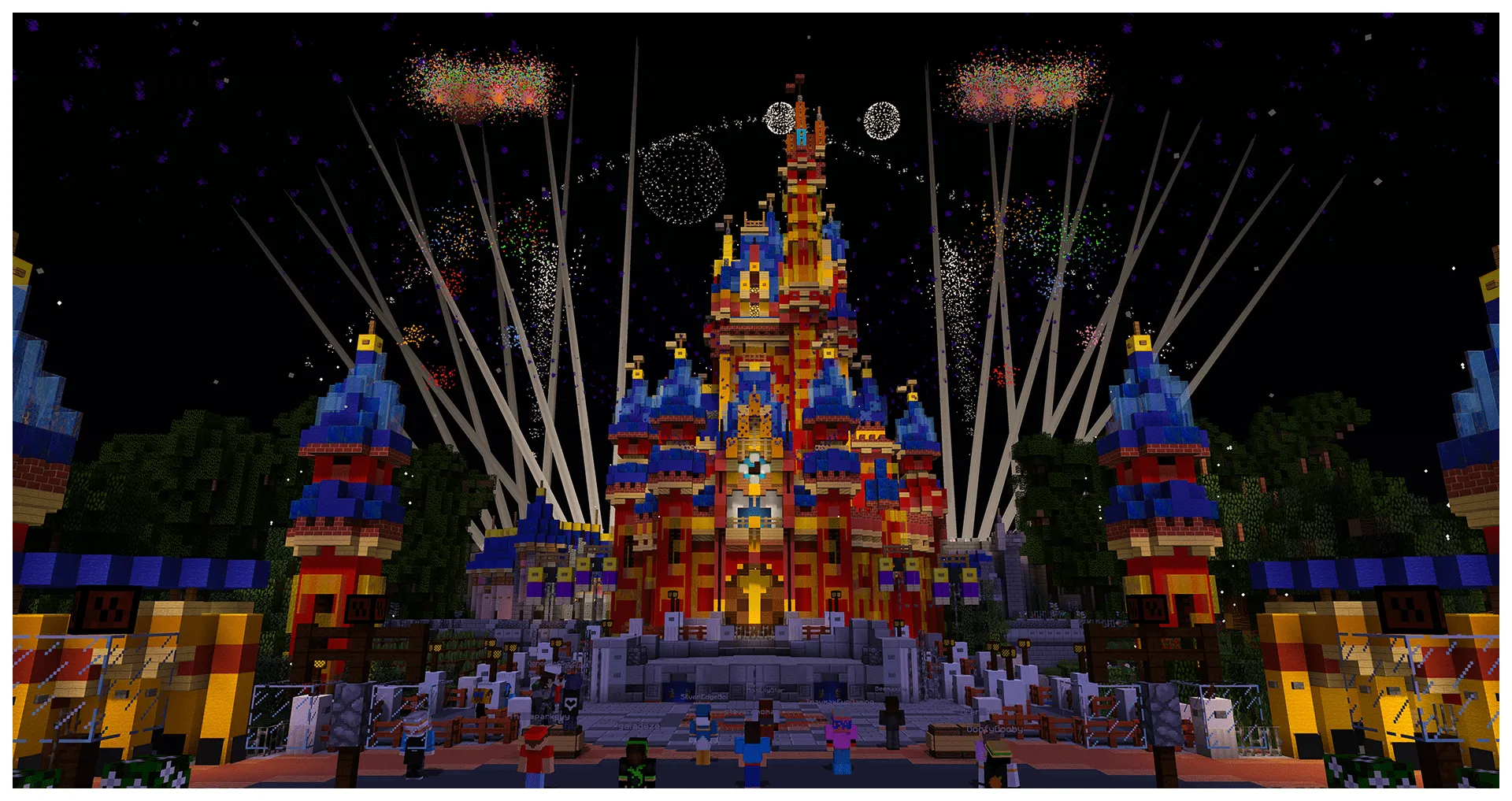
I made my GitHub account in high school to build my Minecraft theme park server, then in college used GitHub Classroom as a student and TA. This meant I was proud to join GitHub as the PM for #edu-classroom, but prouder to join as the single coolest product in tech was leaving technical preview: GitHub Copilot. At the 2022 PM offsite my second week, I remember wistfully looking at the Copilot team, wanting to be close to the action!
After my very fond years in #education, I had a brief stint on the #nux team, where we very quickly rebuilt the sign-up page for the Copilot Free launch. Then, in #client-apps as the PM for #gh-cli, amid terminal agents starting to send
ghusage soaring, I started planning how our team could get in on the Copilot action more directly. I’m glad I did!Across every product and across every team function, I’ve had the pleasure to work with countless amazing, talented people — thank you all for your camaraderie, your dedication to your craft, and for putting up with me!
Please stay in touch. Let me know if you’re ever at the theme parks in Orlando and want to hang!
Below is a longer reflection of my story from initially applying for an internship to my departure.
Providence is Kind: From Brown to Redmond#
My journey working for Microsoft began in earnest ten years ago, at a career fair in Brown’s Sayles Hall my freshman year. I remember careening through the booths, vying to get my hands on all the free swag I could, and starting to think a little more seriously about the career goal I wanted to set for the following four years.
I knew I was studying computer science, but candidly, at this point, I didn’t know what job function I was angling for, or even the industry. Maybe gaming, or something on the technology side of the themed entertainment industry. But big tech always held a certain allure — they recruited heavily out of Brown, they were huge, so the positions were plentiful, and they covered such a breadth of verticals that I didn’t necessarily need to specialize in a particular niche; I could keep my options open (an impulse I retain to this day). Big tech also enjoyed a little more social clout than it does today (at least to me and in my social circles), particularly the likes of Microsoft or Google, more so than, say, Amazon or then-named Facebook, especially when it came to work-life balance and the experience of employees.
At the career fairs of my sophomore year, I did the thing everybody does: dropped off resumes at almost every single table and scheduled as many on-campus interviews as I could. Microsoft’s Explore internship was of particular interest to me, given my uncertainty of chosen role. Like most computer science students, I had a very good idea of what software engineering entailed from my curriculum, but product management was a mystery to me. So the idea of the Explore program, where you spend half the summer as a software engineer and half the summer as a PM, appealed to me.
I secured an on-campus interview, after which the recruiter assured me I’d move through to the next round: an all-day blitz of interviews at Microsoft’s Redmond campus. However, some sort of drama unfolded for the university recruiter assigned to Brown (I have no idea what, but please don’t try to track this person down. From what I remember, they were a kind and helpful recruiter apart from this miss), and I, along with several other applicants, was never scheduled for on-site interviews. As a consolation, we were promised final-round interviews in next year’s recruiting cycle. But of course, by then I’d be a junior, and ineligible for the sophomore-only Explore program.
So instead, I took a full-stack software engineering internship at a small biotech startup in Providence. The CEO was a former Microsoft PM, and I deliberated with her about what I should go for in the following year’s recruiting cycle. Through our conversations, she encouraged me to go the product route. I think secretly I always knew that was going to be the right decision — I really just needed the external push to have the internal permission structure to jump. This was, of course, an era of the internet where the online-engineer crowd on r/ProgrammerHumor and Hacker News trended toward an anti-PM bent. But given my experience on MCParks (the more I learned about it, being a PM seemed quite similar to directing the strategy for MCParks) and my general aptitude, part of me always knew product was going to be a good fit.
I recall the next year’s on-site in Redmond honestly being a lot of fun. Tiring, of course, doing interview after interview for several hours, but fun. Good conversations, and the chance to explain personal projects deeply in a way I hadn’t really gotten to before, with people who got it in a way I hadn’t experienced before, and who, once MCParks was brought up, wanted to talk about nothing else.
I ended up getting an offer, and so in summer 2019, after my junior year, I spent three months in Redmond interning on the Windows Shell team. The day job was mostly user experience research around File Explorer changes for an upcoming project codenamed Santorini, which eventually got canceled, but many of its UX ideas were repurposed for Windows 11 (alas, I didn’t see much of my recommendations for simplifying File Explorer’s share interfaces). I learned that I wanted to be doing something significantly more technical than UX research; that was definitely not where my interests and passions lay.
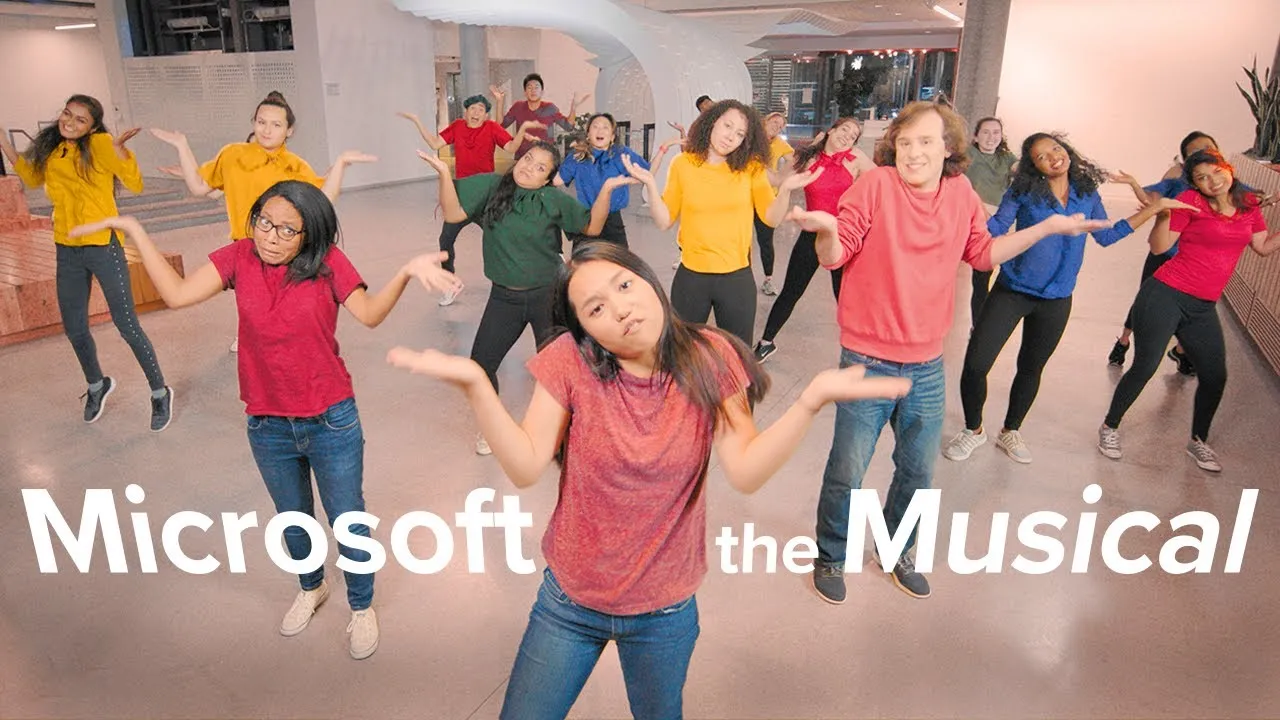
But of course, much more memorable than the day job was my experience starring in Microsoft the Musical. The full story of that is most certainly a story for another time. Still to this day, I can’t go to a Microsoft or GitHub conference without someone who was around the Microsoft kingdom in 2019 recognizing me for that role.
On the “Edge” of Glory#
After graduating college amid the COVID-19 lockdowns in 2020, I started working remotely for Microsoft on the Microsoft Edge install and update team. My beat was enterprise install and update scenarios: pretty much any way you installed or updated the browser other than the built-in auto updater. It was here that I learned exactly what it means to iterate quickly on software that’s expected to remain as backwards compatible as possible, where I learned the breadth of ways software is disseminated and configured in large enterprises, and where I truly began to appreciate the behemoth scale of Microsoft as a company.
It’s also the first time I did professional work whose fruits I could very easily see in daily life: I was there for the deprecation of the old Spartan Edge and the lift and shift over to Chromium Edge as the new default. Whenever I saw a computer out in the wild that was managed by a business and had the new Edge on the taskbar, I could point at it and say that I made that happen. That’s always a very cool feeling.
Two years into my time on the Edge team, however, Microsoft reopened its offices as the pandemic lockdowns officially came to a close. I had taken advantage of the low mortgage interest rates and bought a home in Orlando, near the epicenter of my social circle of friends in the theme park space, so I did not have plans to move to Seattle.
A Product “Education”#
I started applying for other positions when I realized that GitHub, a company whose product I was obviously quite familiar with and held in high regard, was fully remote and, of course, a Microsoft subsidiary. My on-hire stock award would transfer, and it would feel less like starting completely from scratch. So I applied to the PM position at GitHub, and midway through the loop, my recruiter told me the GitHub Education team wanted to take me out of the main PM loop and sort of have a “right of first refusal” for me. I took them up on that and eventually got the job as product manager for GitHub Classroom, a tool I had used as both a student and TA at Brown.
This was my first charge at GitHub. I led Classroom through some ambitious refactors, building something that could utilize more of GitHub’s platform and make things like Actions more approachable to more teachers. I oversaw it through multiple periods of 20% semester-over-semester growth, and its calendar years with the most users.
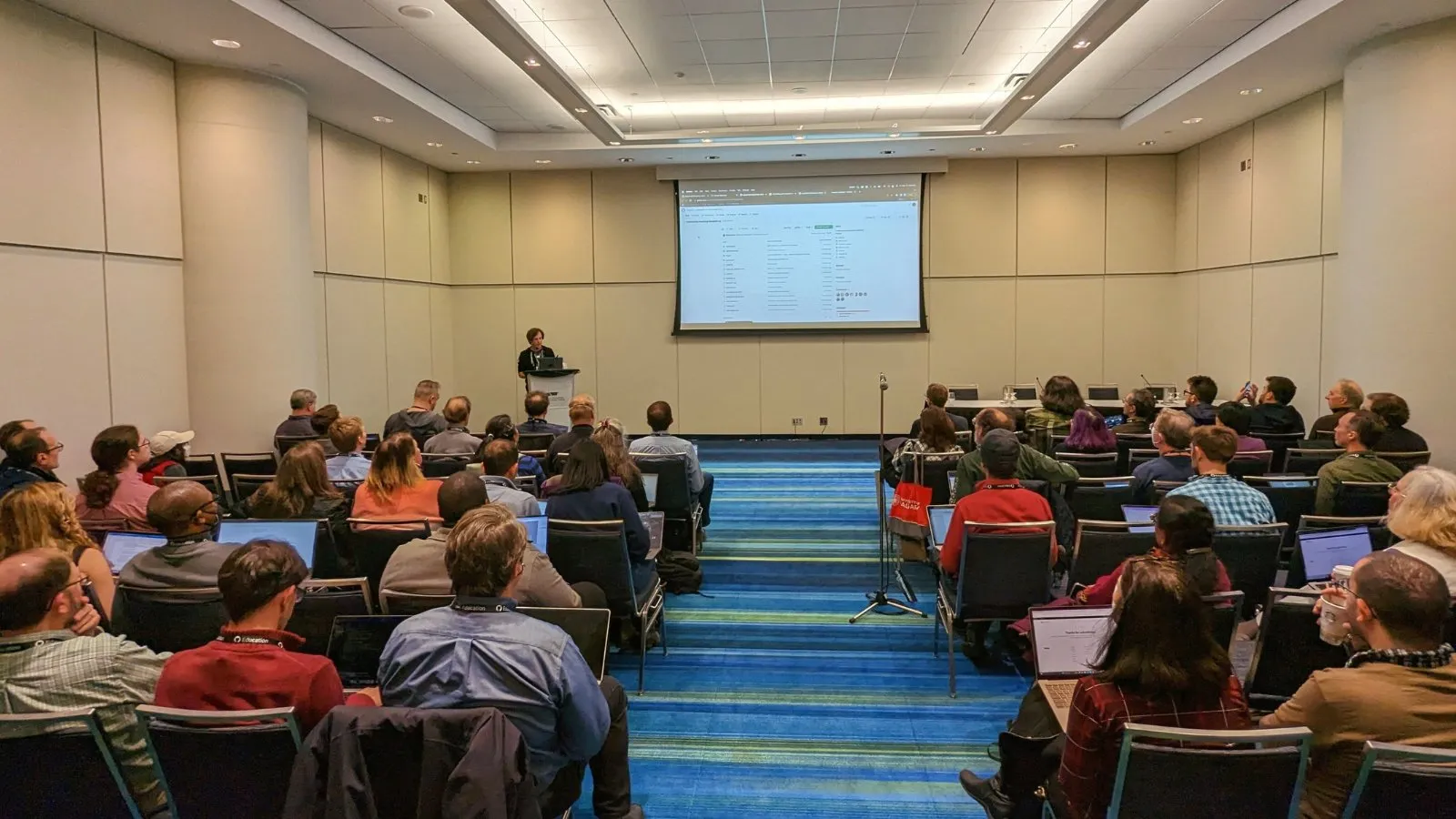
As part of working on education, I also got to present at professional conferences for the first time, at computer science education conferences in Toronto and Milan. I also got to work with the legendary David Malan and the CS50 team, a great honor. I even have a published academic entry as a result of a talk I put together with them.
As Copilot started to consume more of the company, I attended an AI summit GitHub held on the Microsoft campus as the emissary from education, to start figuring out how GitHub could catch up to Cursor after ceding the lead, having invented Copilot and AI coding assistance as an industry. I volunteered to go to this summit because I desperately wanted to get closer to the Copilot action.
From gh to the Copilot CLI#
Then I had my brief stint on the new user experience team. That sprint, making the new sign-up page, gave me confidence that I could lead a team under pressure to accomplish something that is very important, but might not necessarily be all that interesting to me. This was, after all, more of a get-this-thing-over-the-line execution project than something that gave me a chance to flex my product vision muscles. But I knew it was temporary. As part of the reorg that moved me out of education, my manager had a broader ownership area with some technical things under it. I had expressed interest in one of those, and that’s when she gave me the CLI.
I was very pleased to join, because I hold gh in very high regard, both as an open source project and just as a CLI tool. I got to work with incredibly talented team members who really care about open source, and who really embodied “old GitHub” in a world where GitHub was fast dissolving into Microsoft.
It’s funny: when I joined GitHub in 2022, people would always talk about how GitHub was way more like Microsoft than when they had joined years prior. But it still felt remarkably more startup-y and was certainly more async. With every passing month, especially leading up to today, where they’re basically indistinguishable from each other, I’ve seen how that’s changed.
We didn’t really have very robust telemetry for the GitHub CLI, but at the beginning of 2025, we started seeing higher active users, and not only that, those users were calling APIs more heavily than we would generally expect new CLI users to. Eventually, looking at user agents and the character of the usage, I realized that a lot of it was coming from these new-fangled terminal coding agents. Anthropic’s own Claude Code best-practices guide told users to install gh, and the models just knew how to use it really well, because it was such a well-designed CLI with so much documentation out there.
That started the basis for: hey, we really ought to have a good client surface of our own for this. It was a tough sell initially, given the size of the client apps engineering team, and because the dominant Copilot client was VS Code. Part of it was not wanting to rock the boat there or make duplicative bets.
So I pitched it to anybody who would listen to me: in planning meetings, in talks with area directors, in any context where anybody would listen. Different versions of it, too, everything from a really basic subcommand implementing completions and letting the community build everything out from there, to something more like Claude Code or Aider, a pre-Claude Code tool I really liked a lot. I was pulling data to show overlaps with people who used Copilot in VS Code and also had usage attributable to other agents, and people who used gh and Copilot on the web but didn’t use any Copilot client yet. I was just trying to look for any kind of inroad I could.
This started to change when, after another reorg, we had leadership who were really interested in using the platforms we already had market footholds in as experimentation surfaces for finding new ways of bringing Copilot to users. And then what it took was a VP at Microsoft, whose engineering team had done a lot of work on the cloud agent (then “Project Padawan”), also asking, “Hey, why don’t we have anything in the terminal?” and being told, “Oh, go talk to Ryan.” That’s when the proposal was actually taken seriously. We got some engineers on it, and that’s how the Copilot CLI began. As previously mentioned, only my wildest dreams involved this harness growing to refute the XKCD standards comic and become GitHub’s one true harness, let alone Microsoft’s.
To start, I just wanted to be able to name our product in the same sentence as Claude Code to a customer without eliciting an eye-roll. I was thrilled for Simon Willison to call us a competent entry in the market on launch (a few short months later I’d be standing next to him at Microsoft Build as he generated pelicans for MAI’s debut model in GitHub Copilot). With each daily release from our dedicated, ever-growing team, we kept iterating at a speed that required rethinking how products are released at GitHub. And while in daily meetings with Microsoft engineering leaders in January, getting them to adopt us as their main developer tool, suddenly the path to being the harness that powered their customer-facing experiences too felt possible. The rest is history.
What I learned, and what’s next#
In my four years at GitHub, I’ve had seven distinct managers and upwards of ten reorgs. The way the company operates and what its focus in the market is has changed wildly during that time. It’s definitely been an exercise in change management: understanding what I can and can’t control, and learning where I should take charge versus where I should be a team player. I’ve learned to keep pitching good ideas I believe in until the room changes or until I discover the right rhetoric for it to be a hit. I’ve learned what it truly means to grow an underdefined idea into a product that can work at Fortune 50 scale. And I learned how unglamorous execution can buy you the trust to be given the interesting work. I’m incredibly grateful for the opportunities I’ve had here and will forever cherish the time spent building with a team of incredibly smart, talented, and capable builders. But, it’s time for something new.
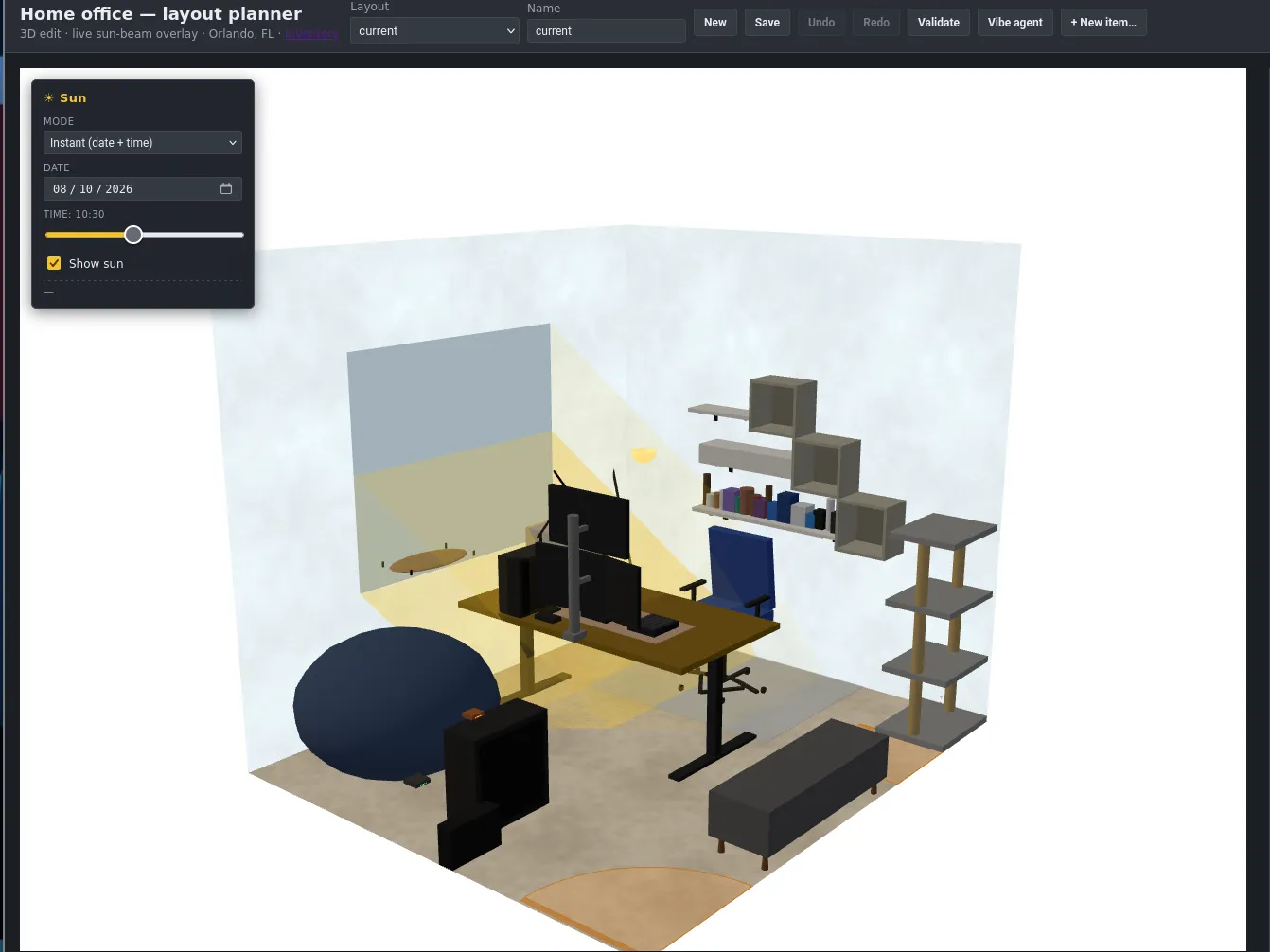
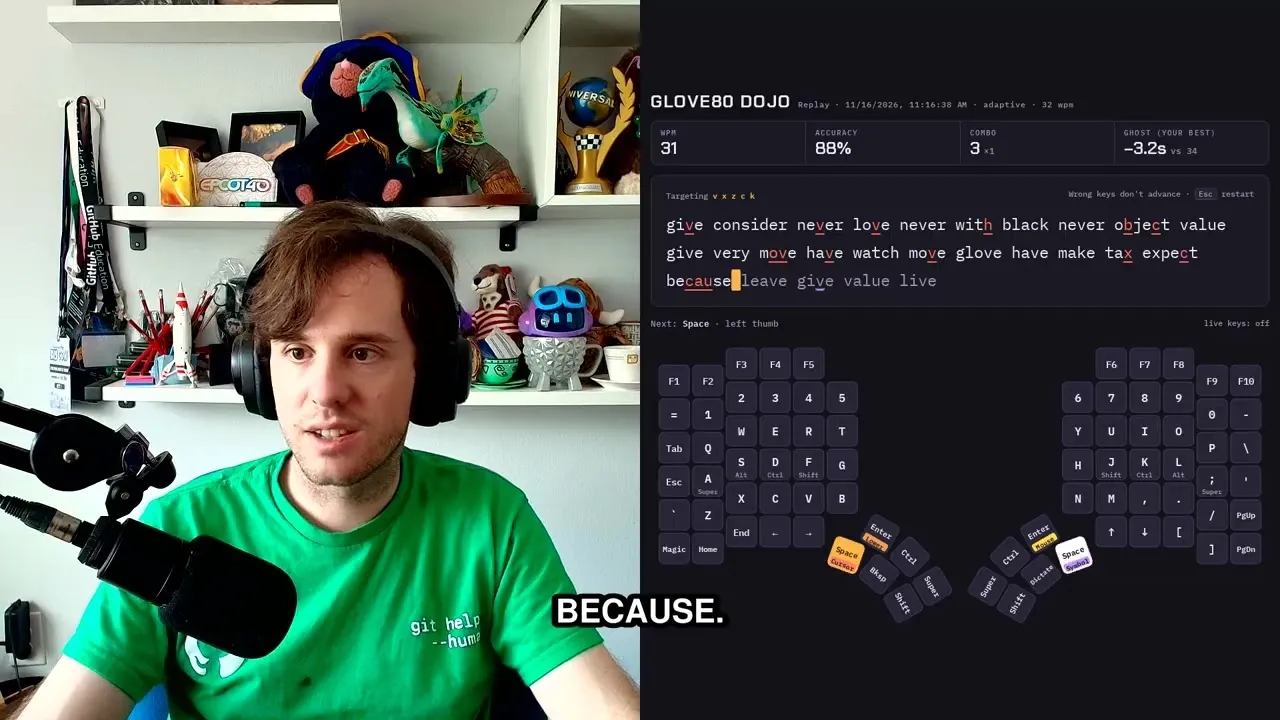
So, what’s next? I’m going to be taking a couple of weeks off — remodeling my office so I have a nice fresh start to my new job, building an AI inference server to add to my homelab to experiment with novel ways of hybrid routing, and drilling myself to get back up to my 100+ words-per-minute typing speed on my new Glove80 ergonomic keyboard, which is proving to be a challenge (this post would have been published earlier today if it weren’t for my painfully slow typing speed. I’m hoping my wrists and fingers will thank me, though).
In a few weeks, I’ll start my next gig, where I’ll be attacking the AI industry from a slightly different vantage point. But more on that after Thanksgiving.

Comments
Comments load as you scroll here.